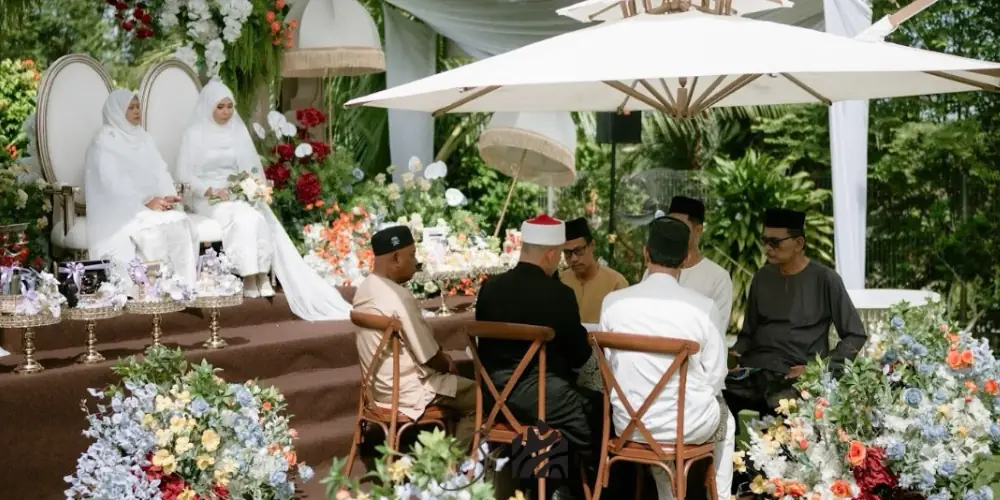
Malaysia is home to many cultures, and each community celebrates marriage in its own meaningful way. While many people know the wedding traditions of the Malay, Chinese, and Indian communities, several smaller ethnic groups also follow customs that families have preserved for generations. Each ceremony reflects strong family values, cultural identity, and close community ties. As a result, every wedding celebrates a unique heritage and tradition.
The Jom Kahwin (Let’s Get Married) Carnival at Taman Botani Perak in Taiping brought many of these lesser-known traditions into the spotlight. The event introduced visitors to the wedding customs of the Orang Asli, Bajau, Iban, Baba Nyonya, Ceylonese, Sikh, Javanese, and Siamese communities.
Beyond colorful attire and ceremonial practices, the carnival highlighted the stories, symbols, and values that shape marriages across Malaysia.
Orang Asli Wedding Customs
Among the Orang Asli Semai community in Perak, the marriage process begins when the bride-to-be tells her family that she wishes to marry. According to Maserna Alang Pelok from Kampung Batu 8 in Tapah, the groom then stays at the bride’s family home for several days before the wedding.
On the third day, the bride’s parents ask the groom to prepare a ring for himself and a necklace for his fiancée. These items symbolize their engagement.
On the fourth day, the bride’s family presents the groom with a **songkok**, a traditional cloth headgear that holds deep cultural value.
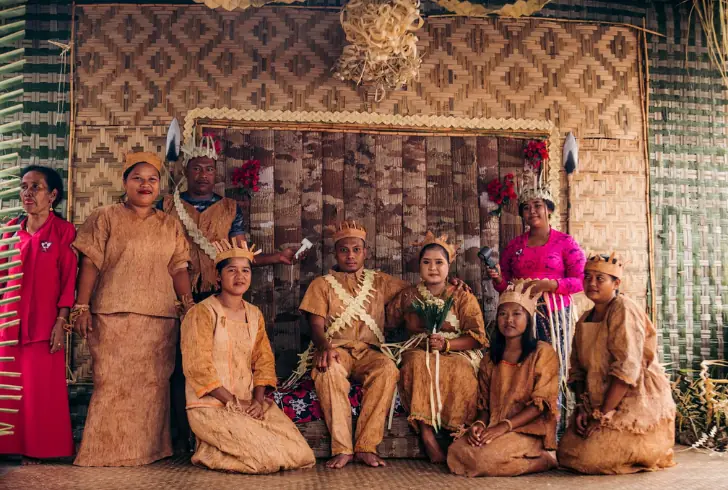
“The songkok is almost sacred. Once given to the groom’s side, it has to be kept properly before being returned to the bride’s family later on,” Maserna said.
“The way he receives the songkok will also be how he gives it back.”
Maserna explained that the songkok also serves as a symbol of harmony within the community. Sending it to another household signals a serious dispute.
The groom later returns to the bride’s home to finalize the marriage plans. “If he doesn’t come, the woman will go look for him. If everything goes well, their marriage will be approved,” Maserna added.
During the wedding, the Tok Batin blesses the couple by sprinkling water mixed with herbs, symbolizing spiritual cleansing. The Tok Batin also feeds them betel nut and betel leaf before the couple feeds each other to represent their commitment to sharing life together.
Most weddings last about three days, although larger celebrations may continue longer depending on the family’s budget. Traditional ceremonies usually take place at the bride’s home or village.
Iban Marriage Traditions
The Iban marriage process begins with merisik, when the groom’s family seeks permission from the bride’s family to proceed with the marriage.
Visco Philip, an army personnel from Kuching, Sarawak, explained, “It is basically for the groom-to-be’s side to seek permission from the woman’s family for marriage.”
The engagement ceremony follows, during which both families set the wedding date.
On the wedding day, the couple wears the ngepan Iban, the community’s traditional attire, and celebrates with family members inside a longhouse. The groom wears a lelanjang, symbolizing courage and leadership, while carrying a terabai and wearing kumbu, a handwoven cloth. The bride wears the sugu tinggi, a headpiece that represents elegance, beauty, dignity, and status.
“The bride will wear sugu tinggi, a headpiece that symbolizes elegance, beauty, dignity and their status,” Visco said.
The attire also features meaningful colors. “Black signifies the richness of Sarawak’s natural resources and the unity of various races. Red symbolizes bravery and willingness to face challenges, and yellow symbolizes sovereignty.”
Traditional items also carry symbolic meaning. Betel leaf and areca nut represent the bond between both families, wang adat shows appreciation to the bride’s family, and jewelry reflects the groom’s commitment to caring for his partner.
“The betel leaf and areca nut symbolise the bond, agreement and relationships between two families, while the money is a sign of appreciation to the bride’s family. The jewellery is a symbol of willingness and capability to take care of the partner,” Visco explained.
Community members prepare the venue and food together, while Taboh Iban music welcomes guests throughout the celebration. Depending on family traditions, the wedding may continue for several days.
Bajau Wedding Practices
The Bajau community also preserves customs that reflect its history and way of life. According to Pertubuhan Wanita Ikhlas Taiping Perak member Fatin Nur Izzati Mohd Asri, the Bajau Samah or Darat (land) and Bajau Laut (sea) communities follow the same Islamic solemnization process but maintain different ceremonial traditions, attire, and wedding celebrations.
She explained that both communities observe several important stages, including merisik, meminang (proposal), norong (presentation of dowry), menanti (arrival of the groom), mayad tabir (opening of the bridal veil), and the majlis maglami-lami, which marks the wedding celebration.
The arrival of the groom differs between the two groups.
“For the Bajau Darat, the groom would traditionally arrive at the bride’s village on horseback. For the Bajau Laut, the groom would arrive in a wooden boat,” Fatin said, noting that these traditions were shared by Bajau women living in Taiping.
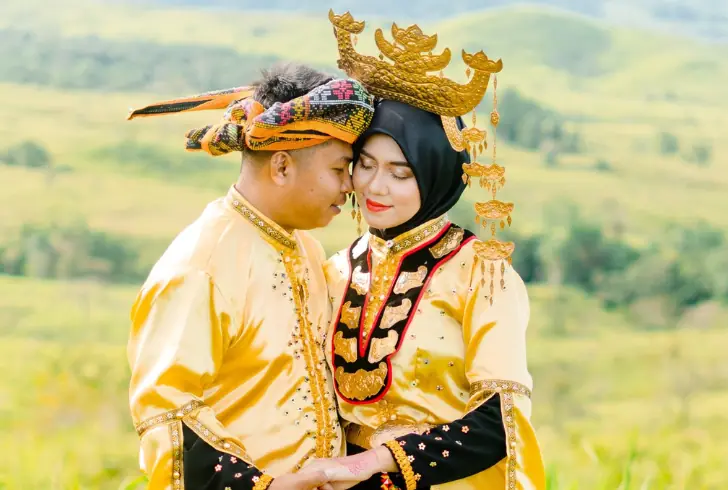
One of the ceremony’s most anticipated moments is mayad tabir.
Fatin Farishah Mahamood, another member of the organization, explained, “The bride will be seated behind a platform.”
Before the groom can see his bride, his representatives must negotiate with the mak andam, or the bride’s representatives, by offering a token payment before the veil is opened.
Wedding guests also enjoy performances featuring the kulintangan, a traditional musical ensemble made up of rows of small brass gongs and percussion instruments that create the festive atmosphere throughout the celebration.
Celebrating Malaysia’s Cultural Heritage
The Jom Kahwin (Let’s Get Married) Carnival at Taman Botani Perak in Taiping introduced visitors to the wedding traditions of communities that often receive less public attention.
In addition to the Orang Asli, Iban, and Bajau communities, the carnival showcased wedding customs from the Baba Nyonya, Ceylonese, Sikh, Javanese, and Siamese communities. Visitors explored how each culture celebrates marriage while preserving traditions that generations have carefully maintained.
The non-governmental organization (NGO) Pertubuhan Wanita Ikhlas Taiping Perak and the Perak state government jointly organized the carnival. Puan Sri Zavirah Shaari, wife of Perak Dewan Negara member Tan Sri Mohd Annuar Zaini, officiated the opening ceremony.
During her speech, Zavirah spoke about the importance of appreciating cultural diversity and respecting different traditions.
“Respecting and understanding our differences can strengthen relationships.”
She also connected that idea to the meaning of marriage.
“Just like marriage, true love is about understanding and bridging our differences. Marriage is not just about two individuals, but also the coming together of two families.”
Her remarks reflected the broader purpose of the carnival, which encouraged cultural understanding through the shared celebration of marriage.
Cultural Understanding Through Tradition
Pertubuhan Wanita Ikhlas Taiping Perak chairman Toh Puan Norisha Abdul Rahman, who also served as the event’s organizing director, described Malaysia’s multicultural identity as one of its greatest strengths. She is the wife of Larut, Matang and Selama district Orang Besar Jajahan Datuk Seri Wan Mohd Isa Wan Mohd Razalli.
According to Norisha, learning about different customs helps communities build stronger relationships.
“By understanding each other’s culture, we can truly appreciate one another.”
The event also showed how cultural heritage supports tourism. Perak tourism committee chairman Loh Sze Yee said the carnival gives local and international visitors a chance to experience Malaysia’s diverse traditions.
“In tourism, we are not selling a location, as foreign tourists do not just want to eat or see buildings, they also want to experience our culture.”
Loh also said the carnival helps people discover traditions that families have kept alive for generations. “This carnival showcases our heritage that has been passed down over several generations.”
Visitors Discover New Traditions
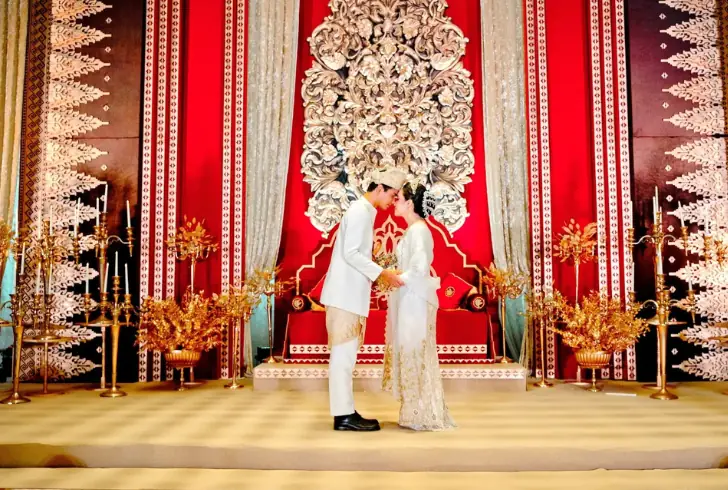
The exhibits introduced many visitors to wedding customs they had never experienced before.
Civil servant Siti Mariam Mahdar from Miri, Sarawak, shared that the Sikh wedding ceremony was something she had previously seen only in books and photographs.
She also found the Orang Asli traditions especially memorable.
“The wedding customs of the Orang Asli were also new to me.”
Siti Mariam observed that the traditional clothing featured strong environmental influences, reflecting the community’s close relationship with nature.
After exploring the different displays, she noticed a common thread connecting every culture represented at the carnival.
“I realised that their attire had strong environmental elements.”
She also pointed out that every tradition, regardless of cultural background, celebrated the union of two families while honoring the newly married couple.
A Global Perspective
The carnival also welcomed international visitors. Mike Hinton, a company director from the United Kingdom, came across the event during his visit to Taiping. The experience gave him a closer look at Malaysia’s many cultural traditions.
Mike already knew that Malaysia has many ethnic communities. Seeing the wedding ceremonies in person helped him better understand their meaning and history.
“I understand that all these customs date back many years and each one is special in its own way.”
He also compared the celebrations with weddings in the United Kingdom. The colorful Malay and Indian ceremonies stood out to him. He had attended a Chinese wedding before and noticed how different Malaysian traditions are from those in his home country.
“I found the Malay and Indian weddings to be very colourful and I have attended a Chinese wedding before. It is so different from weddings in the UK.”
His comments showed how Malaysia’s traditional wedding customs continue to interest visitors from around the world. They also give people a better understanding of the country’s multicultural heritage.
Malaysia’s wedding traditions reflect the country’s cultural diversity. Every community continues to preserve customs that have passed from one generation to the next. The Orang Asli Semai honor the sacred songkok. The Iban wear symbolic traditional attire. The Bajau community performs the mayad tabir ceremony. Each custom represents identity, family values, and cultural heritage.
Events such as the Jom Kahwin (Let’s Get Married) Carnival introduce these traditions to more people. They also encourage greater appreciation for the customs that continue to shape Malaysia’s diverse communities.